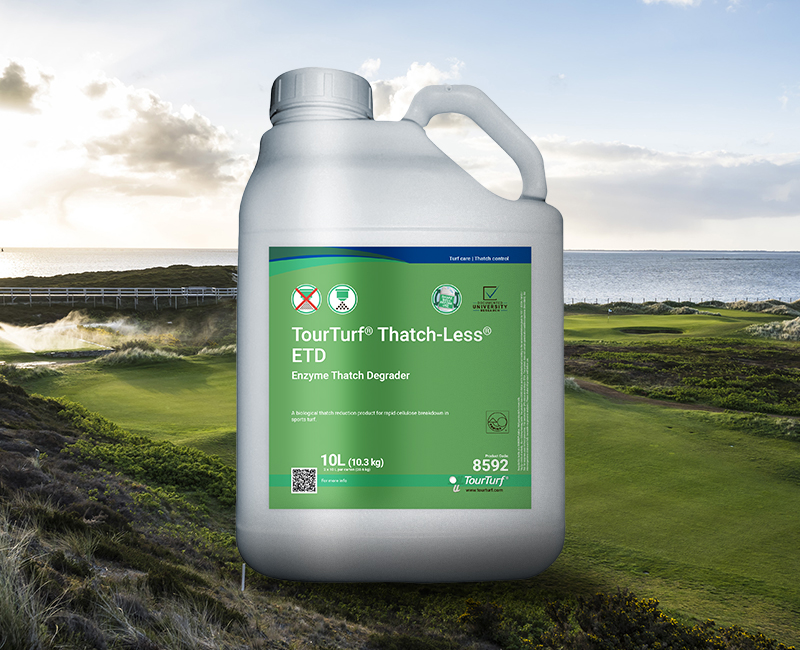
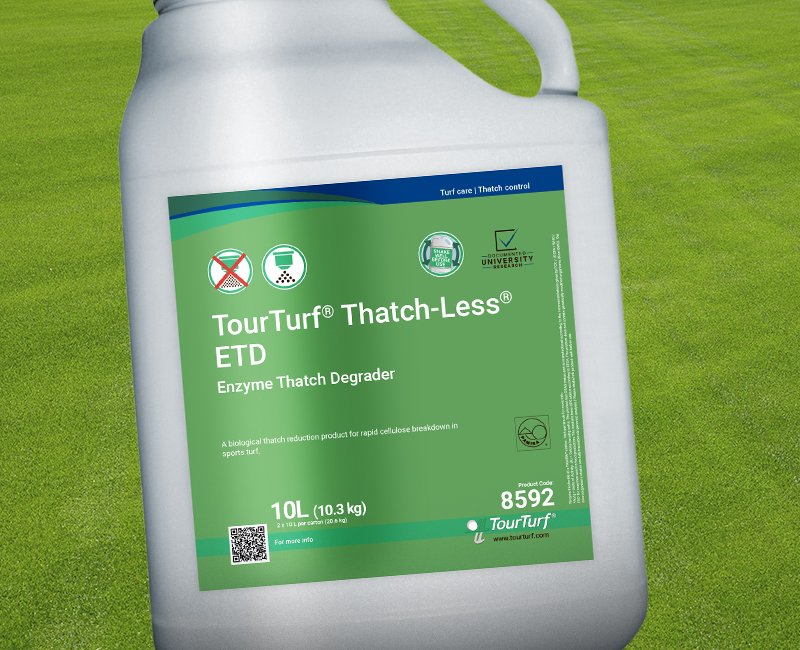
TourTurf® Thatch-Less® ETD Enzyme Thatch Degrader
_GB_Mockup_web.png)
_GB_Mockup_web.png&width=180&format=webp)
_GB_Mockup_web.png&width=640&format=webp)
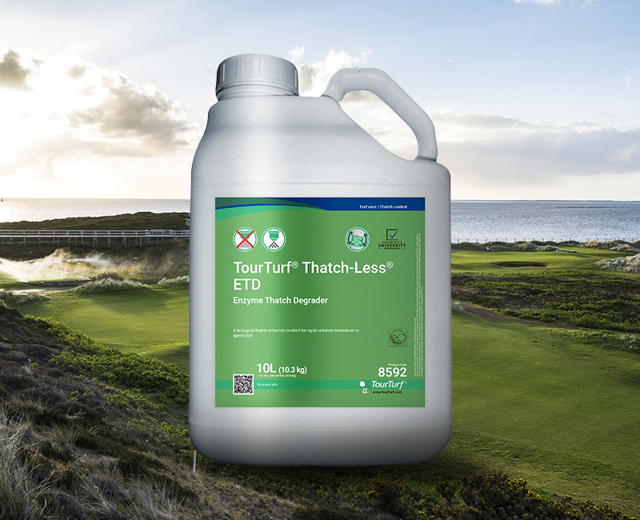
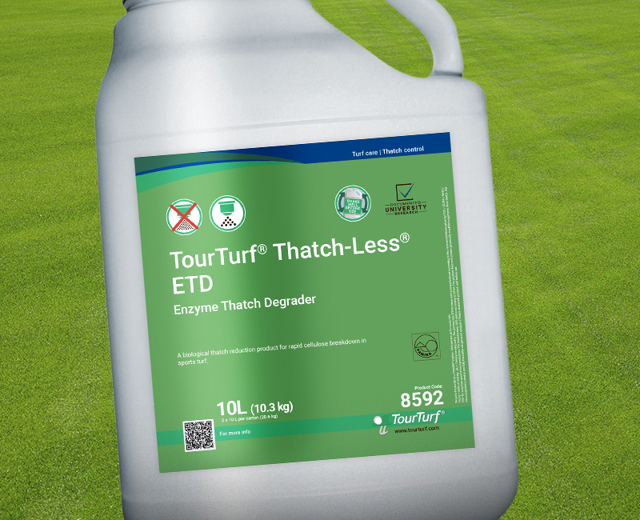
TourTurf® Thatch-Less® ETD Enzyme Thatch Degrader is a biological activator for rapid thatch degradation and contains a broad spectrum of effectively working laccase-(>10,000 AU/L*), and cellulase enzymes (>250,000 AU/L*), plant sugars, wetting agent, seaweed and 4 different cellulase producing microorganisms (5x10⁹ CFU/ml). Thatch control is the key to healthy turf, uninterrupted infiltration of nutrients and water into the rootzone and firm, true, playable surfaces.
This combination gives up to 25% documented reduction of residual organic matter (thatch) in sports turf, which typically consists of 25% lignin and 75% cellulose or hemicellulose. Because of performance pressures on sports turf, it is difficult to get the organic matter components of the thatch layer to decompose easily without the valuable enzyme and microbial input from TourTurf® Thatch-Less® ETD.
The combination of readily active enzymes and steadily performing microorganisms in this bioproduct makes it possible to degrade and convert the hard to breakdown thatch into plant nutrients, sugars and soil humus more effectively. The 4 beneficial Bacillus strains that make up the ‘core consortia’ of microorganisms in the product are B. subtilis, B. licheniformis, B. amyloliquefaciens and B. pumilus.
This unique and highly effective biological solution is developed for thatch- and organic matter control in sports turf by Danish and British scientists. Our microorganisms strains are fully traceable via genomic analysis (DNA fingerprint).
| Carbohydrates | 2 % |
| Microorganisms |
Thatch degrading microorganisms: The enzymes used are derived from naturally occurring fungi and they degrade all forms of cellulose, hemicellulose and lignin. |
| Seaweed | 5 % |
| pH | 7 |
| Density | 1.03 |
| Content information |
The prefiltered product easily passes through a 100-mesh (150-micron) spray filter—the smallest typically used on sprayers. *AU/L = Activity Units. The product has GRAS status and is manufactured according to the recommendations given by FCC/JECFA/WHO/FAO for enzymes used in food production. The bacteria have QPS status according to EFSA. The product does not contain genetically modified organisms (Non-GMO). |
| Product name | TourTurf® Thatch-Less® ETD Enzyme Thatch Degrader |
| Product number | 8592 |
| CE labelled | No |
| UFI number | QNR7-AW50-A00F-PUXM |
| HS code | 3002490020 |
| Dangerous goods | No |
| Quantity per carton | 20 |
| Fertiliser type | Special |
| How to use |
4 times - at 10 day intervals above 15°C. |
| Application |
Thatch Reduction: Dry Patch Reduction: Fairy Ring Reduction: Oil Spill Reduction: |
| Nozzle size | Big droplets |
| Synergy | Synergy with FTD, OXT, MCB, EXC & EPT. |
Downloads
Product details
Thatch-Less® is available worldwide, only through E. Marker A/S and we have manufactured the product since 2018 based on demand from customers to provide the best possible product for organic matter control.
The problem – Thatch
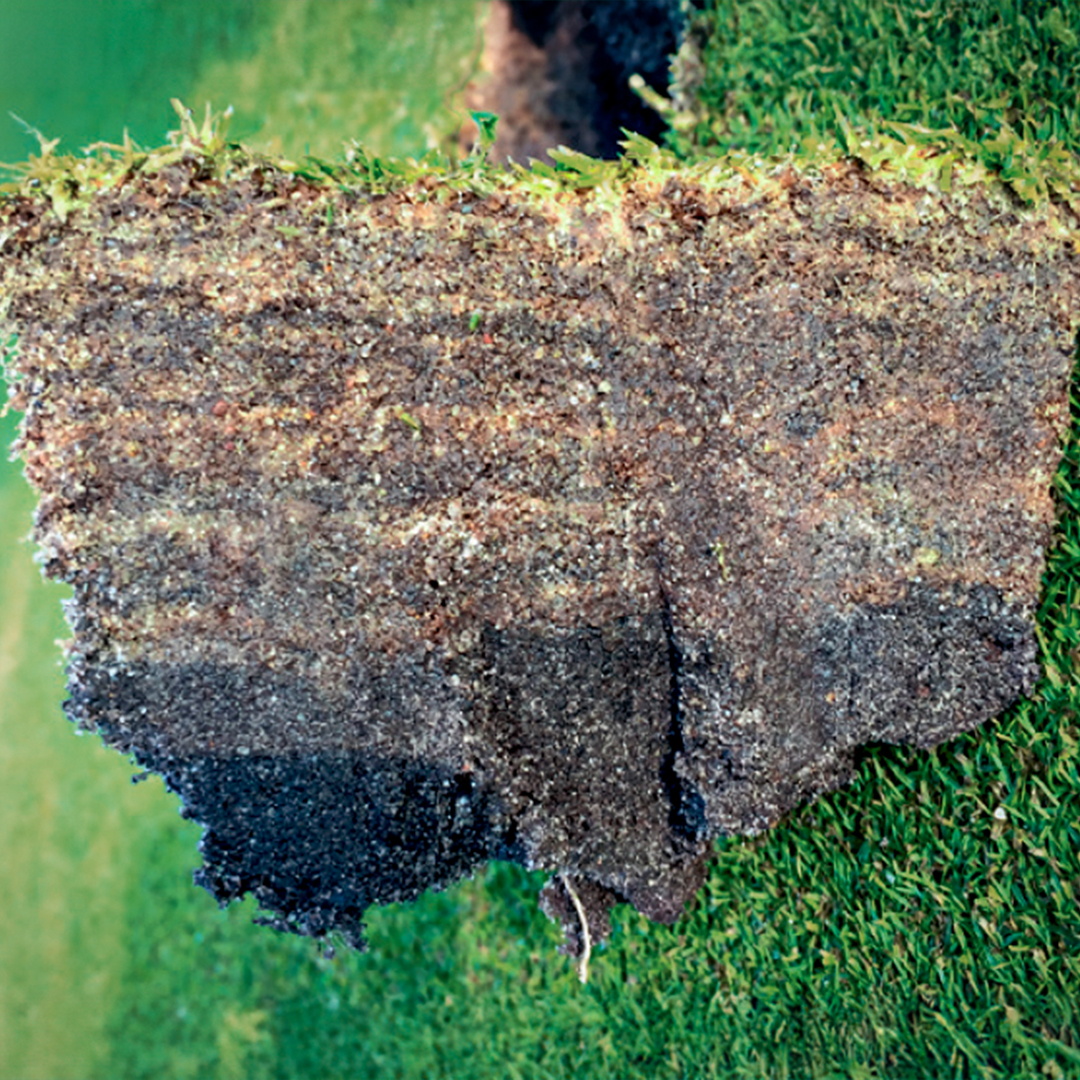
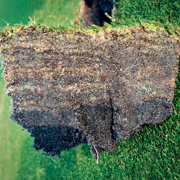
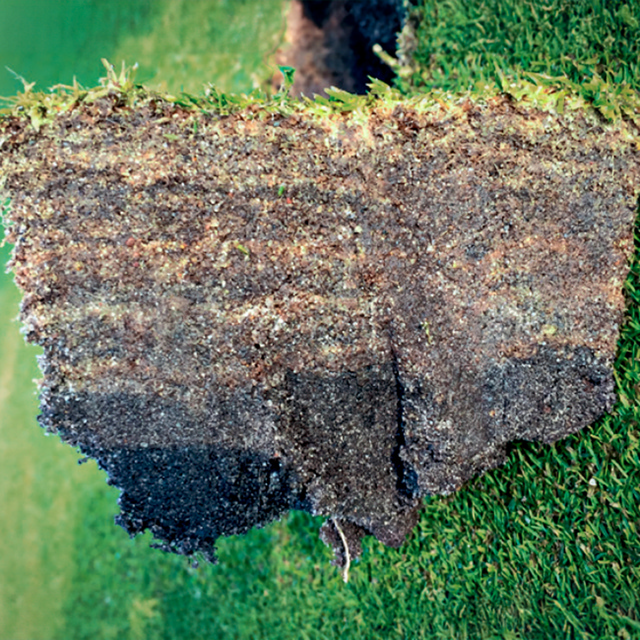
Thatch is defined as an accumulation of dead and living plant material between the soil and the roots of the plants. It is a natural process that occurs during normal growth in sports turf.
An excessive thatch layer has several negative consequences, such as:
- Poor micrological activity in the soil
- Limited air and water in filtration
- Problems with dry spots and water repellent soil
- Favourable conditions for disease outbreaks
- Favourable conditions for harmful insects
- Soft playing surfaces
- Limited effect of pesticides and fertilisers
Using nature’s own enzymes:
Cellulase is a type of enzyme that increases the degradation of cellulose and hemicellulose. The enzymes directly adhere to the dead cellulose plant material, which constitutes up to 75% of the thatch layer. Laccase is a generic term for a variety of enzymes that are usually made by bacteria and fungi that can degrade the lignin found in the cell walls and which are particularly resistant to degradation in the thatch layer.
Therefore, we also recommend that you use our product with high counts of laccase-producing fungi and bacteria together with the Thatch-Less® ETD. The product is called TourTurf® Thatch-Less® FTD. In this way, the 25% lignin left in the thatch can also be converted into sugars, nutrients and humus.
The updated formulation of Thatch-Less® ETD ads ready-made enzymes to the soil profile that start the degradation of organic matter in the thatch immediately. The high content of laccase breaks the strong chemical connections of lignin in old roots, stems and cell walls. This makes the cellulose more vulnerable to the cellulase enzymes that will break down cellulose and hemicellulose.
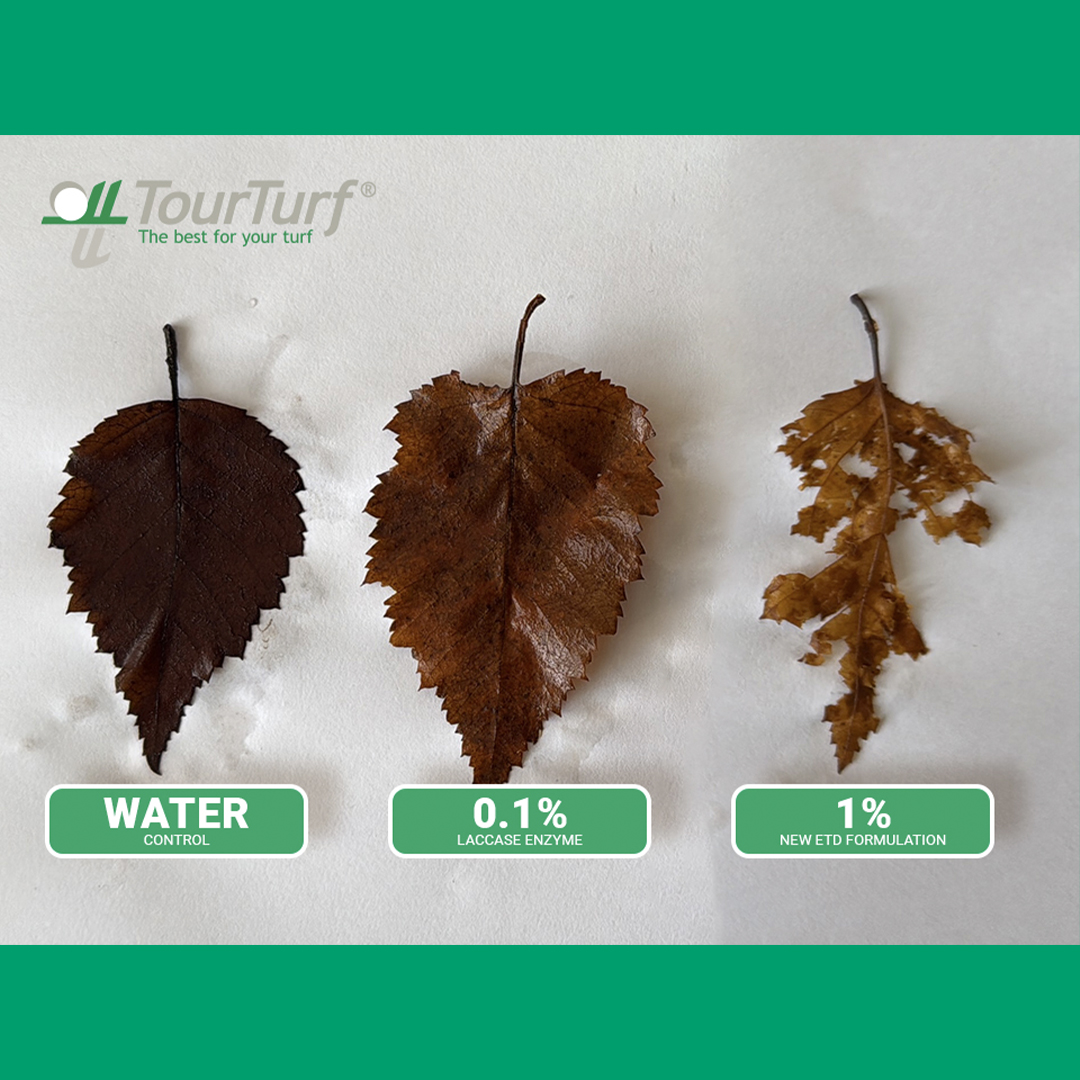
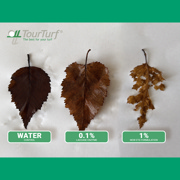
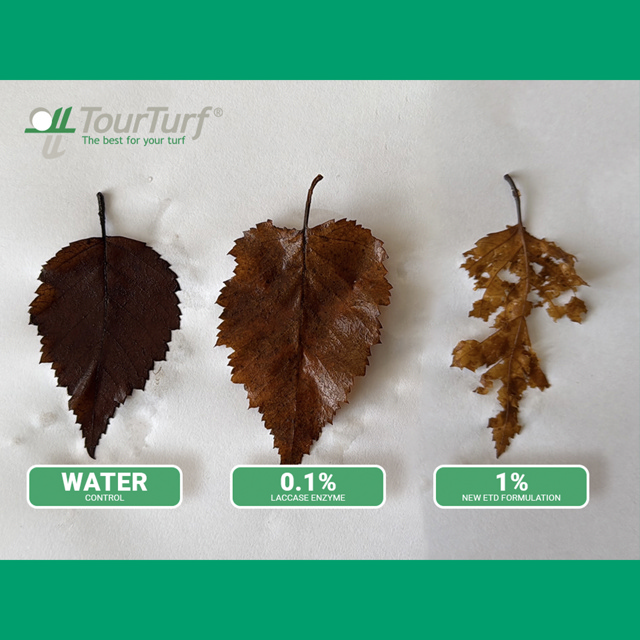
In this in-house experiment, you can observe the effect on a birch leave, containing much more lignin than thatch in turf. Pure laccase enzymes are able to soften the leaves and start to break down the structure. But as you can see on the right side, Thatch-Less® ETD is superior. The laccase starts the process, cellulase can break down the cellulose and bacteria, fuelled by carbohydrates and seaweed extract, can continue the decomposition. The trial was done without oxygen under anaerobe conditions. The decompositions will work even better with enough available oxygen. To reduce thatch in turf, optimise your aerification program and combine Thatch-Less® ETD and Thatch-Less® FTE applications with TourTurf® OXT Oxygen Turf for readily available chemically bound oxygen, increasing activity of beneficial soil microbes.
Read about how to control organic matter and thatch on Turf Corner.
Key Benefits:
- Improved reduction of thatch compared to aeration alone
- Aeration and TT Thatch-Less® ETD gives up to 25% reduction of the thatch layer in a season
- Increased microbial growth and activity in the root zone
- Breaks open even the strong chemical structures of lignin
- Breaks down cellulose
- Breaks down hemicellulose
- The added carbohydrates are used by plant cells as an easily accessible source of energy for the microorganisms
- Contains plant growth hormones, which enhance root growth and development of new turf
- Increases turf health, root growth, germination and establishment of turf
Thatch-Less® ETD adds enzymes into the soil profile that start the degradation of organic matter in the thatch immediately.
The by-products of degradation then become available to the bacteria and fungi found in Thatch-Less® FTD, so they can produce more specific enzymes.
Read more about the multiple advantages of microbes to turf, in our article on Turf Corner.

See some of our other products:
PROTECTING THE ENVIRONMENT IS VERY IMPORTANT.
SUSTAINABLE AND ORGANIC TURF CARE PRODUCTS
ARE FOR THE FUTURE.