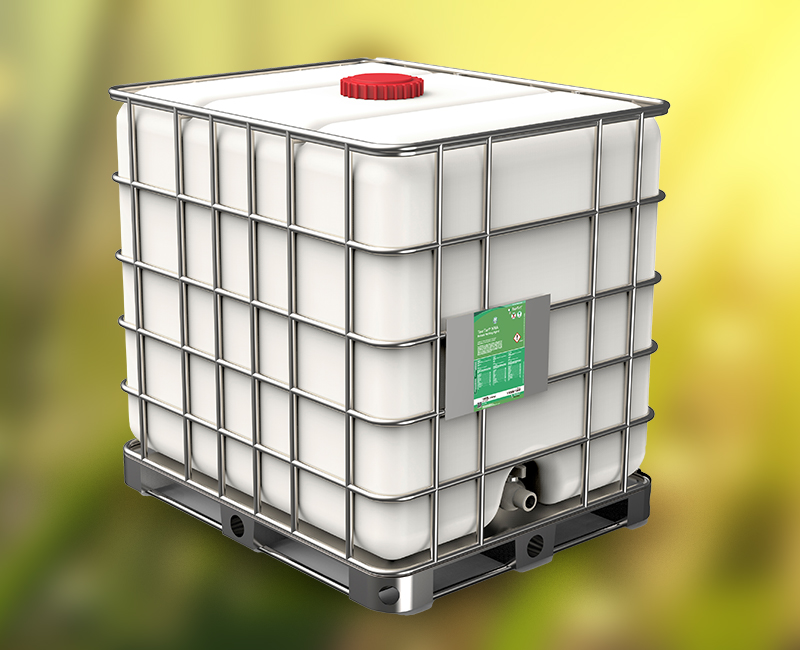
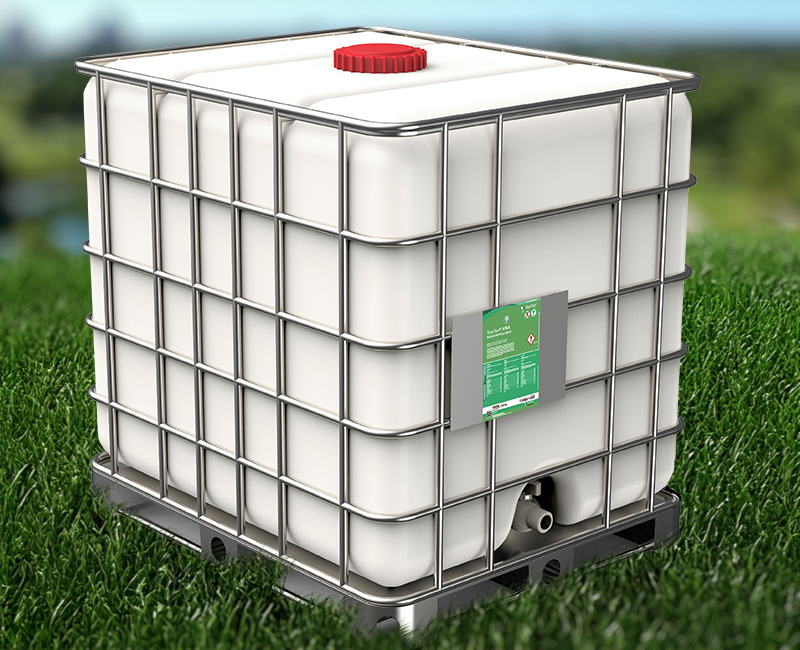
TourTurf® NWA - Natural Wetting Agent (1000L)
_GB_Mockup_web.png)
_GB_Mockup_web.png&width=180&format=webp)
_GB_Mockup_web.png&width=640&format=webp)
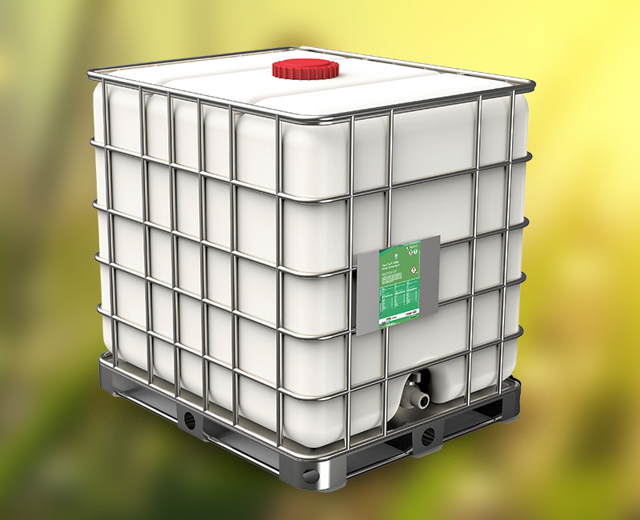
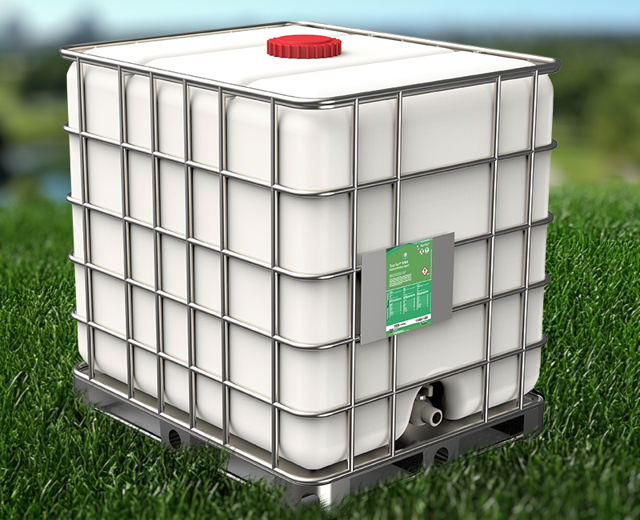
TourTurf® NWA has a natural content of NPK, iron, sulphur and other micronutrients. In addition, the content of amino acids, fatty acids will help promote healthy turf plants in any growing conditions year round. The natural surfactants improve soil moisture distribution, ensure that water reaches plant roots more effectively. This reduces water wastage and enhances nutrient uptake, especially in sandy or hydrophobic soils.
Camellia sinensis is the plant behind the world’s favourite teas and is not only valued for its flavourful leaves but also for its natural wetting agent properties. The saponins found in tea leaves act as effective surfactants, reducing surface tension and enhancing water penetration. These natural compounds have made the extracts increasingly popular. The product has a dark brown colour with a distinct smell of tea.
Fatty acids are key building blocks of cell membranes, they benefit turf by enhancing its cell membrane structure and giving it structural stability.
Strong cells make turf more resistant to environmental stress like foot traffic or turf pathogens. By improving the cell membrane structure, fatty acids can help turf retain more water, improving drought tolerance and reducing the need for frequent irrigation. Fatty acids can play a role in regulating physiological responses and help the plant to react to heat stress.
Healthy cell membranes are necessary for nutrient uptake, enabling turf to access water and nutrients more effectively.
| Nitrogen (N) | 2.6 % |
| Phosphorus (P205) | 0.6 % |
| Potassium (K2O) | 1.6 % |
| Calcium (CaO) | 2.1 % |
| Copper (Cu) | 0.2 % |
| Iron (Fe) | 0.11 % |
| Magnesium (MgO) | 2.2 % |
| Manganese (Mn) | 0.09 % |
| Sulphur (SO3) | 0.8 % |
| Zinc (Zn) | 0.06 % |
| Amino acids | 8.7 % |
| Organic material | 27.6 % |
| pH | 3.7 |
| Density | 1.24 |
| Product name | TourTurf® NWA - Natural Wetting Agent (1000L) |
| Product number | 11088/IBC |
| CE labelled | No |
| UFI number | SYHN-NW7F-400U-3NTE |
| HS code | 12089000 |
| Dangerous goods | No |
| How to use |
Use TourTurf® AFL Antifoam Liquid for reduction of foaming in the mixtank. |
| Application |
20-40L/ha. |
| Nozzle size | Big droplets |
| Synergy | Synergy. |
Downloads
| Name | Download | File type |
|---|---|---|
| PDS_ TourTurf® NWA Natural Wetting Agent _ 11088_1000 GB.pdf | 1546 KB | |
| MSDS_TourTurf-NWA-(Natural-Wetting-Agent)_11088_IBC_GB.pdf | 360 KB |
Product details
Camellia sinensis is the plant behind the world’s favorite teas and is not only valued for its flavorful leaves but also for its natural wetting agent properties. The saponins found in tea leaves act as effective surfactants, reducing surface tension and enhancing water penetration. These natural compounds have made the extracts increasingly popular.
Camellia sinensis-derived wetting agents improve soil moisture distribution, ensures that water reaches plant roots more effectively. This reduces water wastage and enhances nutrient uptake, especially in sandy or hydrophobic soils.
Amino acids:
Amino acids are the building blocks for plant proteins. The plant will combine amino acids to form peptide chains and later complex proteins.
All the processes in the plant like tissue development, growth, recovery from injury and self-defence require proteins.The turf plant can synthesise all the needed amino acids from the mineral nutrients it takes in. But the plant can absorb amino acids through the roots as well, saving the energy to produce them itself, especially in times of plant stress.
Over time, microorganisms in the rootzone will break down amino acids into their components, making nutrients readily plant available.
Fatty Acids:
Fatty acids are key building blocks of cell membranes, they benefit turf by enhancing its cell membrane structure and giving it structural stability.
Strong cells make turf more resistant to environmental stress like foot traffic or turf pathogens.
By improving the cell membrane structure, fatty acids can help turf retain more water, improving drought tolerance and reducing the need for frequent irrigation.Fatty acids can play a role in regulating physiological responses and help the plant to react to heat stress.
Healthy cell membranes are necessary for nutrient uptake, enabling turf to access water and nutrients more effectively.
Some research suggests that certain fatty acids could have antifungal properties, potentially helping to make the plant more resilient against certain turf diseases. Some fatty acids can function as signalling molecules, triggering the plants response to disease.



See some of our other products:
PROTECTING THE ENVIRONMENT IS VERY IMPORTANT.
SUSTAINABLE AND ORGANIC TURF CARE PRODUCTS
ARE FOR THE FUTURE.